Itzchak Tarkay


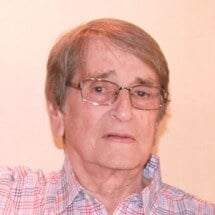
If there were some sort of global prize for the most inspiring artist of our time, Itzchak Tarkay would be the prime candidate. This exuberant painter of joy was born in 1935 in Subotica on the Yugoslav-Hungarian border, a dark place and time when Europe was on the brink of war and Jewish families like his own were about to be targeted by the rising Nazi party. In 1944, when he was only 9 years old, Tarkay and his whole family were captured and sent to the Concentration Camp. It is miraculous that they all survived. When the Allied Forces liberated the camp a year later at the end of World War II, his family returned home. Having escaped almost certain death, young Itzchak found, in art, a way to express his love for life. Today he is revered not just as a survivor, but as an artist who has redeemed tragedy with the power of the paint brush.
Savoring the sunny colors and sensual scenes of Tarkay’s widely popular paintings, you would never guess the traumatic prologue. Elegant ladies reclining languorously in opulent drawing rooms, or fashionable ladies passing a lazy afternoon in a sophisticated café, the world of Tarkay’s paintings is a realm of pleasure. On the canvas, all is luxury, calm and voluptuousness.
But we return to the arduous journey of the artist. After such a traumatic beginning, Tarkay’s life story followed the far more positive course of world events, the rebirth of Israel as a nation. It also led him to art. In 1949, when his family joined the massive emigration of Europeans to Israel, many of them released from the death camps, they were first sent to a transit camp at Be’er Ya’akov. They lived in a kibbutz for several years. Tarkay, who back in Yugoslavia had taken the top prize in art competitions, won a scholarship in 1951 to the Bezalel Academy of Art in Jerusalem. Although he only spent a year in art school (it was a financial hardship for his family), he found a way to continue his studio education privately under Yosef Schwartzman, a well-known art teacher.
Then it was time to join the Israeli army. His studio life was put on hold until his service was ended. Then he moved to Tel Aviv, enrolled in the prestigious Avni Institute of Art and Design, and pushed his training to the technical heights so evident in his painting. He was mentored by important Israeli artists including Moshe Mokady, Marcel Janko, Yehezkel Streichman, and Avigdor Stematsky. In 1956, upon graduation, he scored a resounding success with his first solo exhibition in Tel Aviv, and he was only 26. Later, when he was an acclaimed leader of Israeli art, he in turn mentored younger artists.
Unexpectedly, after this early acclaim, Tarkay took off the next fifteen years from painting. He made his triumphant return with an acclaimed one-man exhibition in Tel Aviv in 1975, and it was not long before he was recognized more widely on the international stage. His big break in the United States came at the International Artexpo in New York in 1986, when he came to the attention of Park West Gallery. He was in Detroit in 2012 when he passed away at the age of 77. To this day, Park West is the exclusive agent for Tarkay’s estate.
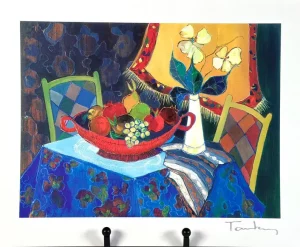
Too Cold at Home by Itzchak Tarkay
Seriolithograph on paper, signed in plate, 2013. 7 x 9...
$275
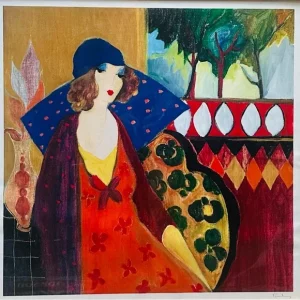
Indigo Chapeau by Itzchak Tarkay
Seriolithograph on paper, signed in plate. 2002. 25 x 25...
$780
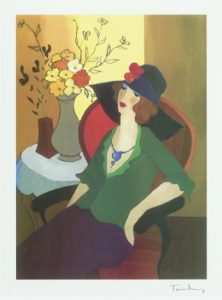
Happy Recollections by Itzchak Tarkay
Seriolithograph. 22 3/4 x 16 1/2". Framed. Signed in plate....
$750
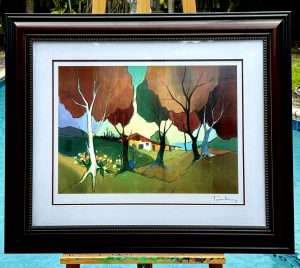
Jamestown Cottage by Itzchak Tarkay
Seriolithograph. 15 1/8 x 21 1/4". Framed. Signed in plate.
$750