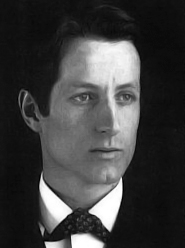
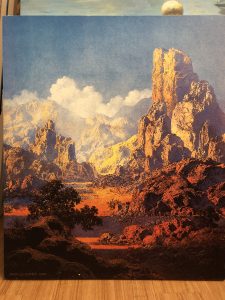
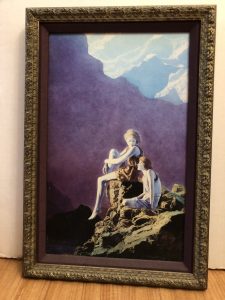
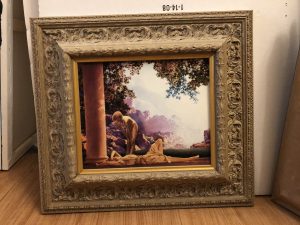
Maxfield Parrish (1870-1966) was a renowned American painter and illustrator famous for his luminous, dream-like landscapes and fantastical scenes, characterized by his signature “Parrish Blue” and vibrant, saturated colors achieved through glazing techniques, becoming a household name through popular prints, book illustrations, and calendars, influencing artists from Surrealists to Pop artists. Born Frederick Parrish, he trained in architecture and art, notably under Howard Pyle, and achieved immense popularity in the early 20th century, with his works like Daybreak becoming iconic, though his complex personal life included a long-term unconventional arrangement with his assistant, Sue Lewin.
Early Life & Education
Born:July 25, 1870, in Philadelphia, to Quaker parents; his father was painter Stephen Parrish.
Name:Changed from Frederick to Maxfield (his grandmother’s maiden name).
Studies:Attended Haverford College (architecture) and the Pennsylvania Academy of the Fine Arts, influenced by Howard Pyle.
Artistic Style & Technique
Luminosity:
Achieved by layering thin, translucent glazes of oil paint over monochromatic underpaintings.
“Parrish Blue”:
His distinctive, saturated cobalt blue for skies and water became his trademark.
Themes:
Often featured idyllic, romanticized landscapes, classical figures, and fantasy worlds.
Process:
Used photography and projection to create figures with precise drapery and distortion.
Career & Popularity
Early Success:
Became a prominent poster designer in the 1890s, winning a major competition for a Pope Bicycle poster.